
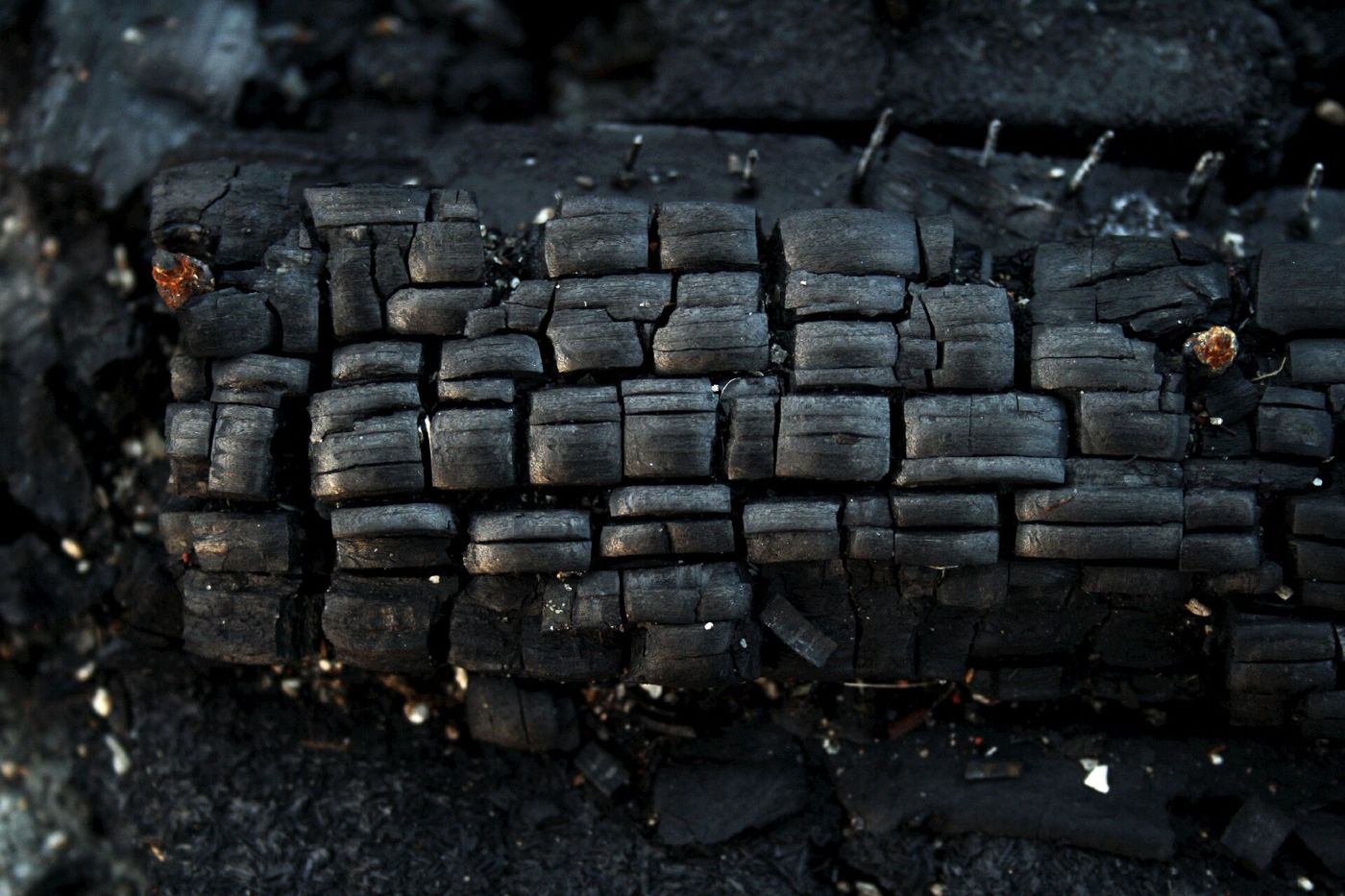
01
Heat
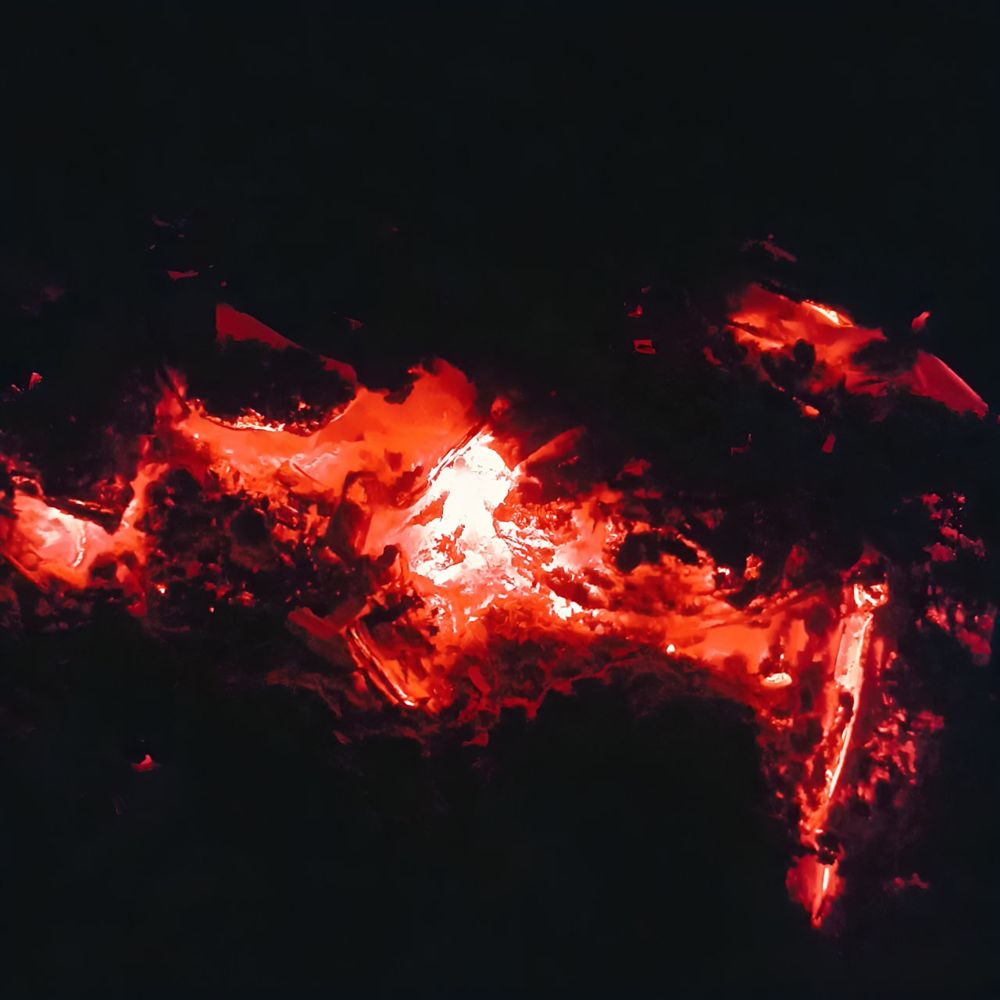
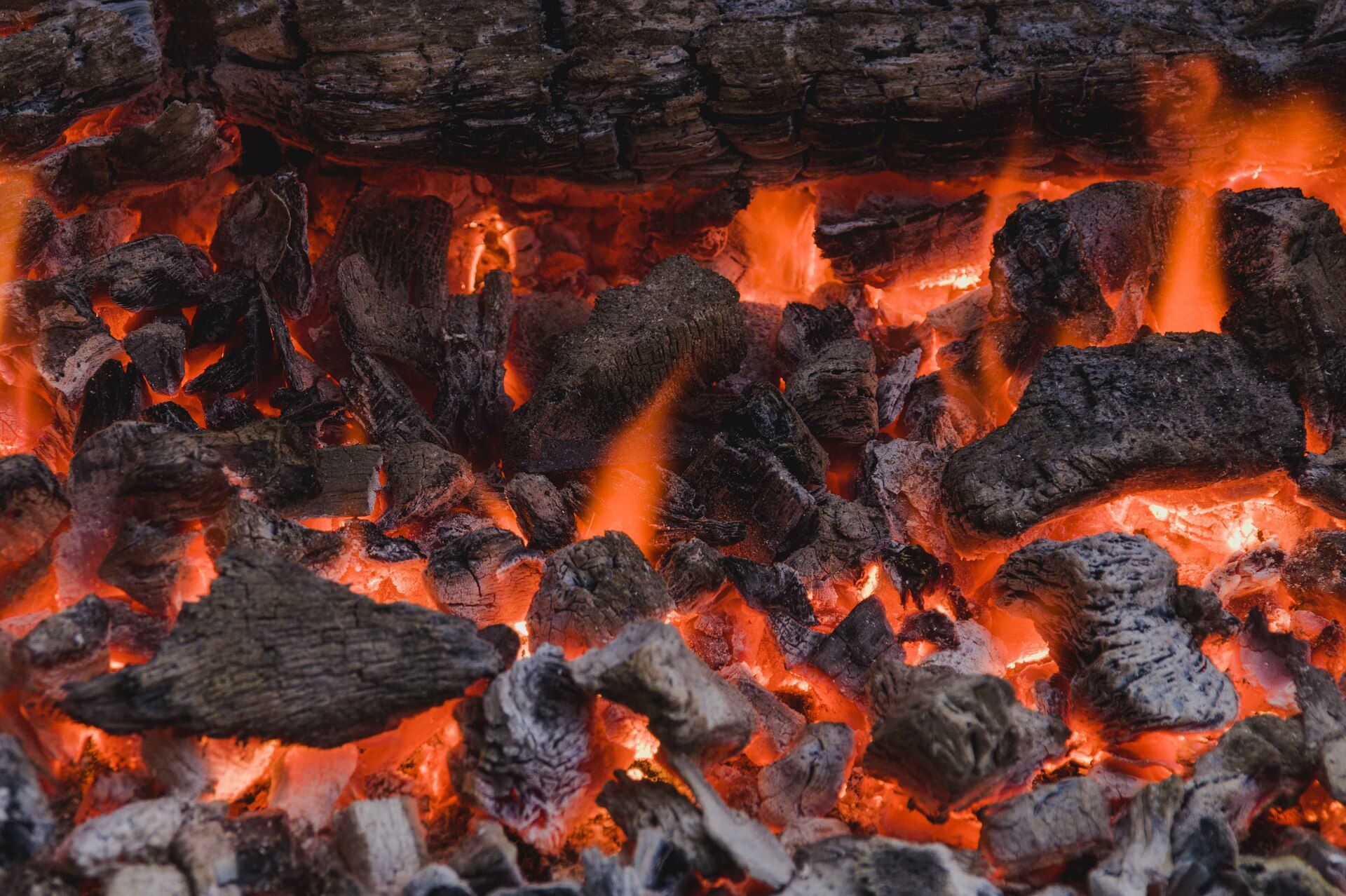
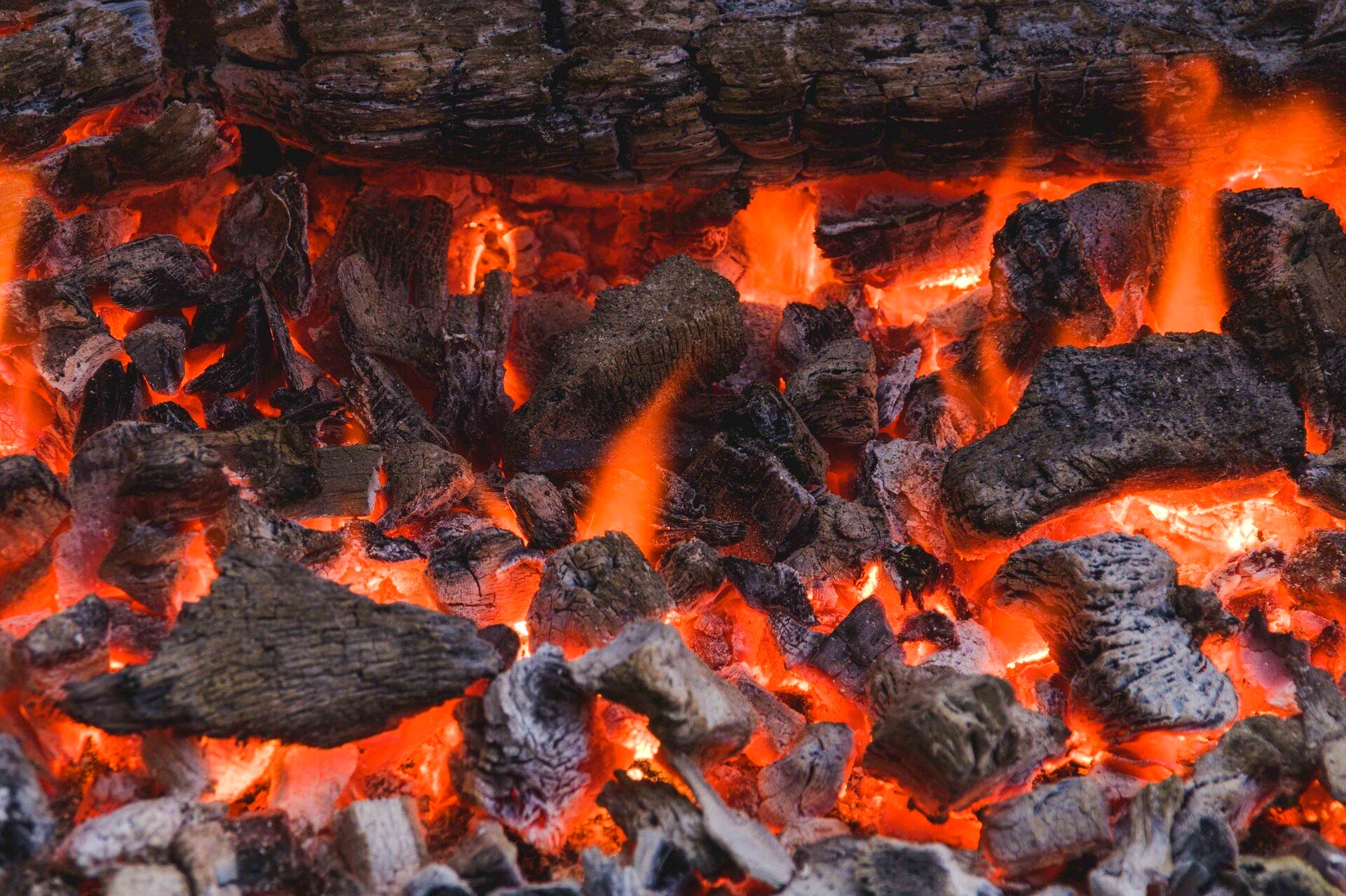
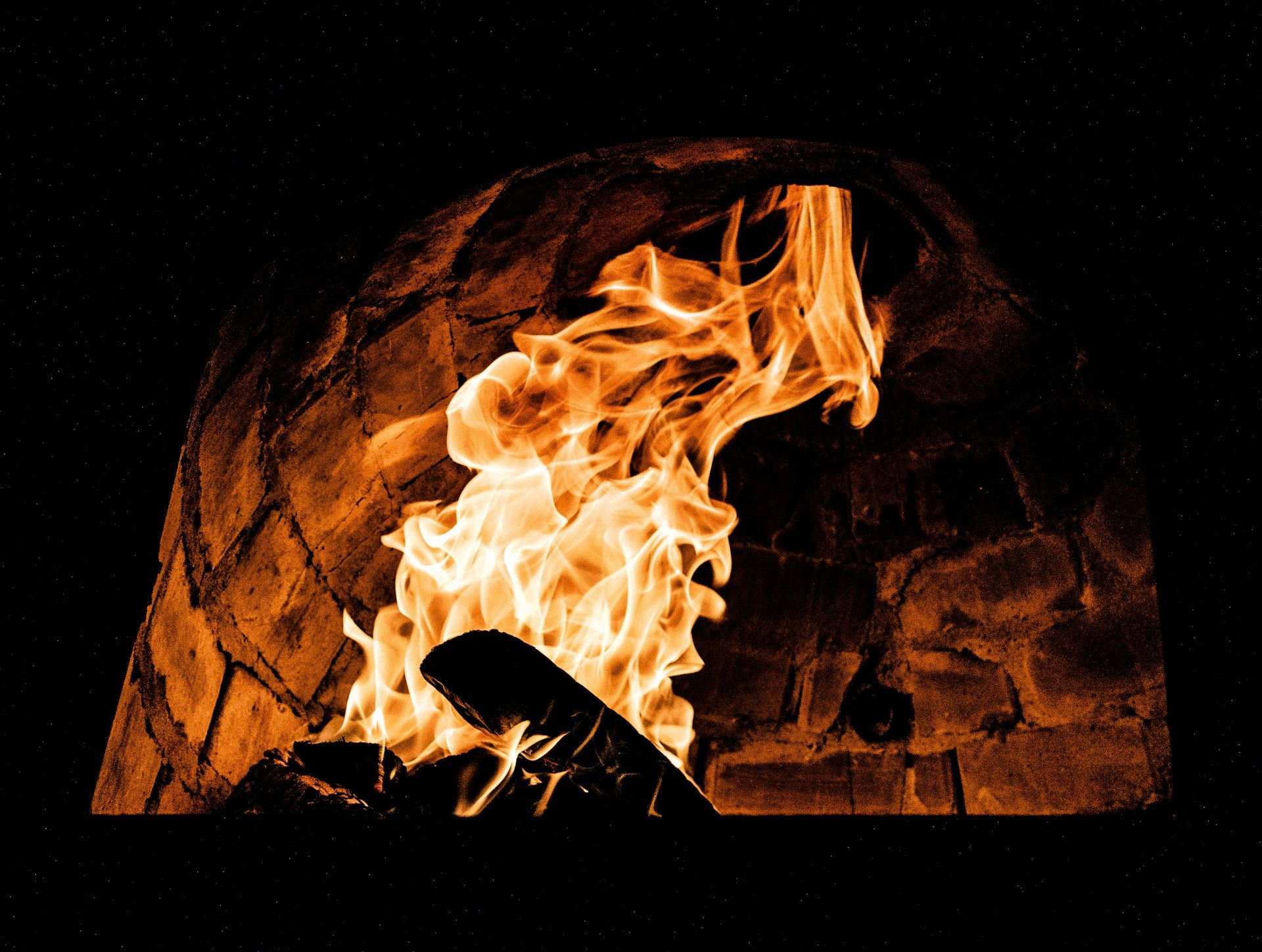
Hardwood carbon reaches intense temperatures for a real sear and crust.
Hotter · Longer · Cleaner
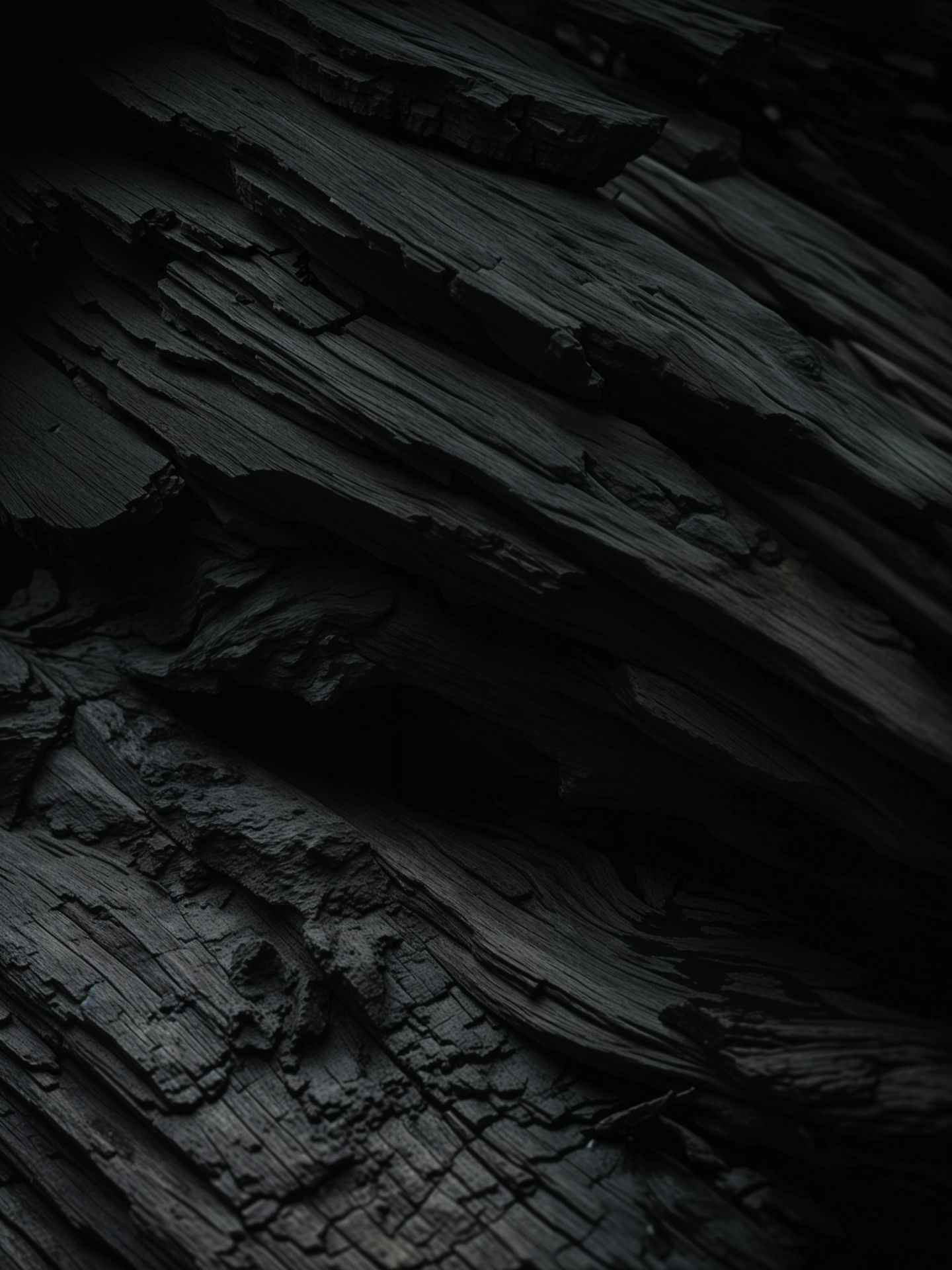
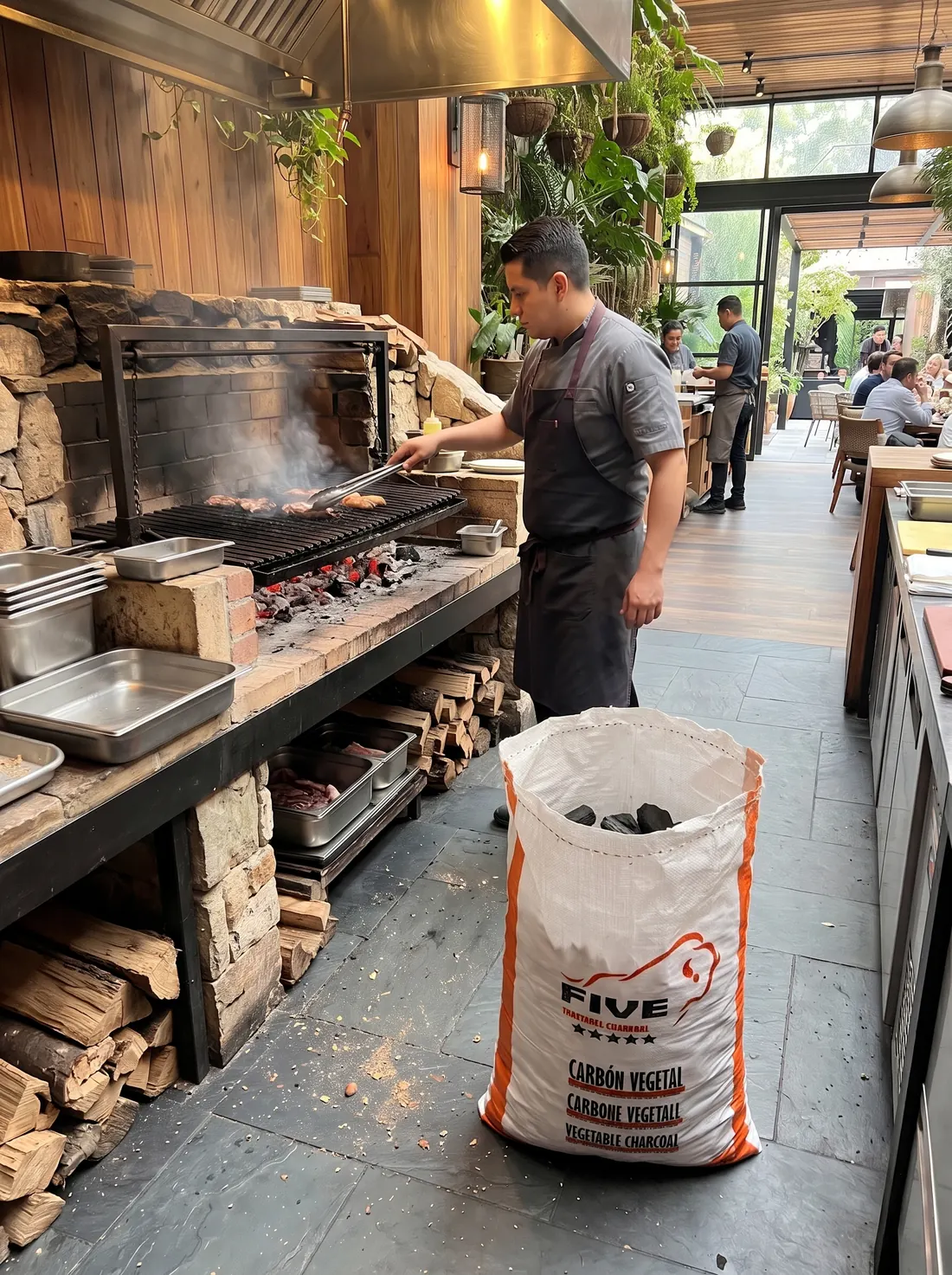
Premium marabu lump charcoal: dense, slow-burning, made for when the fire has to last.
Origin
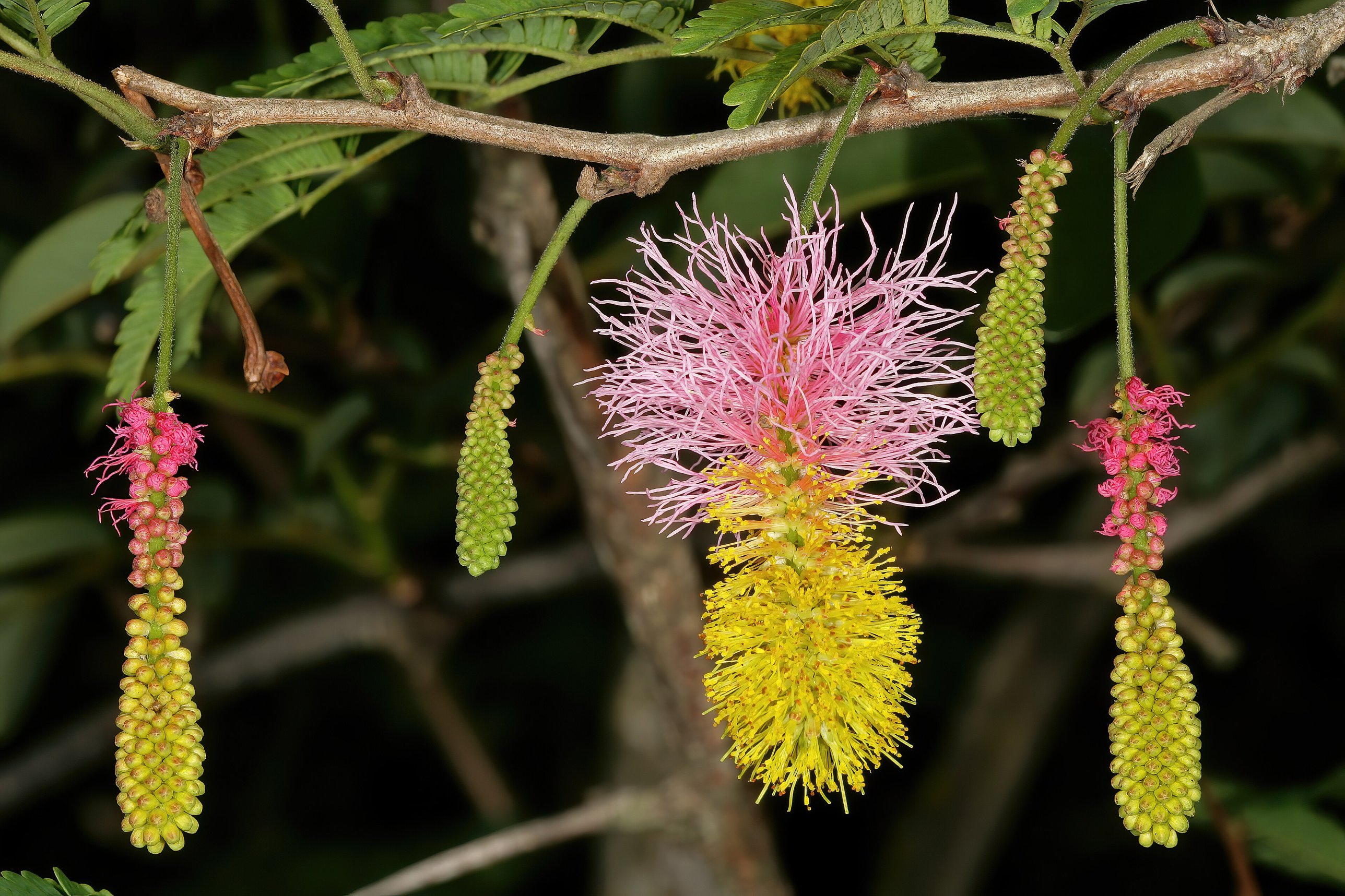
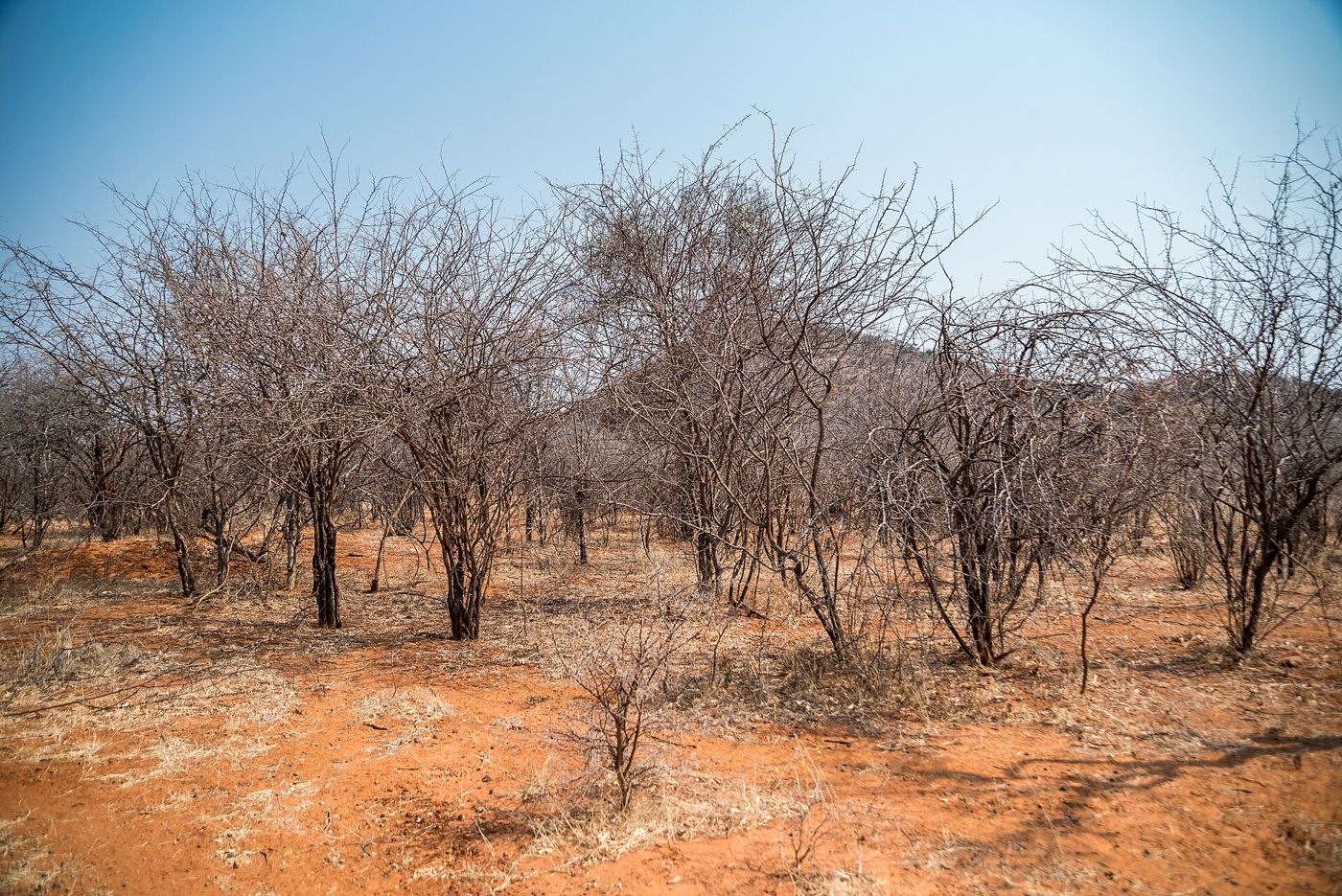
Marabu is a thorny shrub that invades fertile farmland. Its wood is so dense that it makes one of the best charcoals in the world. Every sack of FIVE gives a field back to farming.
01 — The bush02 — The charcoal
Our name is our promise
Every piece is graded on the five things that matter when you cook over fire. Keep scrolling.
Our name is our promise
Every piece is graded on the five things that matter when you cook over fire. Keep scrolling.
Hardwood carbon reaches intense temperatures for a real sear and crust.
Burns slow and even: one load lasts a long service or a full cook.
Little smoke, few sparks and no chemical additives: just wood and fire.
Heavy, hard pieces that don't crumble and leave very little ash.
100% marabu, harvested to reclaim farmland. Nothing else in the sack.
Heat
More heat from every kilo you burn.
A faster sear and a perfect crust, without drying the meat inside.
FIVE 7,450 kcal/kg· Ordinary charcoal ≈6,000 kcal/kg
Purity
of a sack of ordinary charcoal isn't pure charcoal.
Steady embers that don't fade mid-service. You pay for charcoal, not filler.
FIVE >75% fixed carbon· Ordinary charcoal 65–70%
Smoke
Almost four times less smoke on the grill.
Clean flavor: meat tastes like meat, not bitter smoke.
FIVE <8% materia volátil· Ordinary charcoal ≈30%
Label
of ordinary charcoal sacks don't state their origin correctly.
If you don't know what wood you're burning, you don't know what reaches your food.
FIVE 100% marabu· Ordinary charcoal 89% mislabeled
Legality
of ordinary charcoals are at high risk of coming from illegal wood.
Mangrove charcoal, banned in many countries, strips coastlines. FIVE clears invaded land.
FIVE traceable· Ordinary charcoal 61% high risk
Marabu: reference values from Josper's marabu charcoal spec sheet, to be replaced by FIVE's own lab results. Ordinary charcoal: typical values for charcoal made at ~400 °C (FAO) and ~25 kJ/g for cooking charcoal (T. Reed), via Bioenergy Lists. Labeling and legality: WWF analysis of 36 barbecue charcoals (2018).
Made for wood-fired kitchens, charcoal ovens, backyard grills and anyone who takes fire seriously.
Process · How good charcoal is made
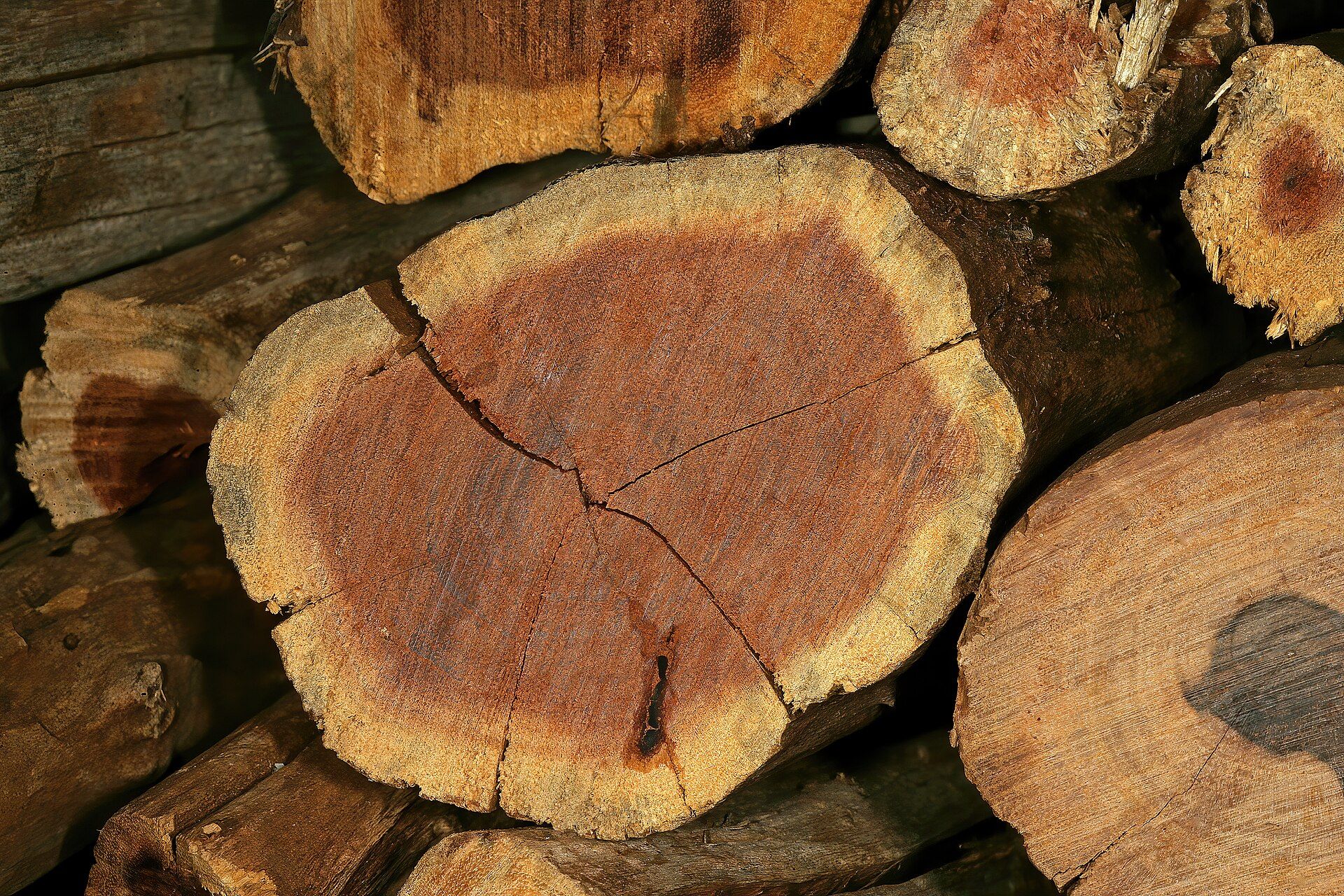
Marabu is cut by hand in invaded fields. It all starts here: a very dense wood that becomes a heavy, long-lasting charcoal.
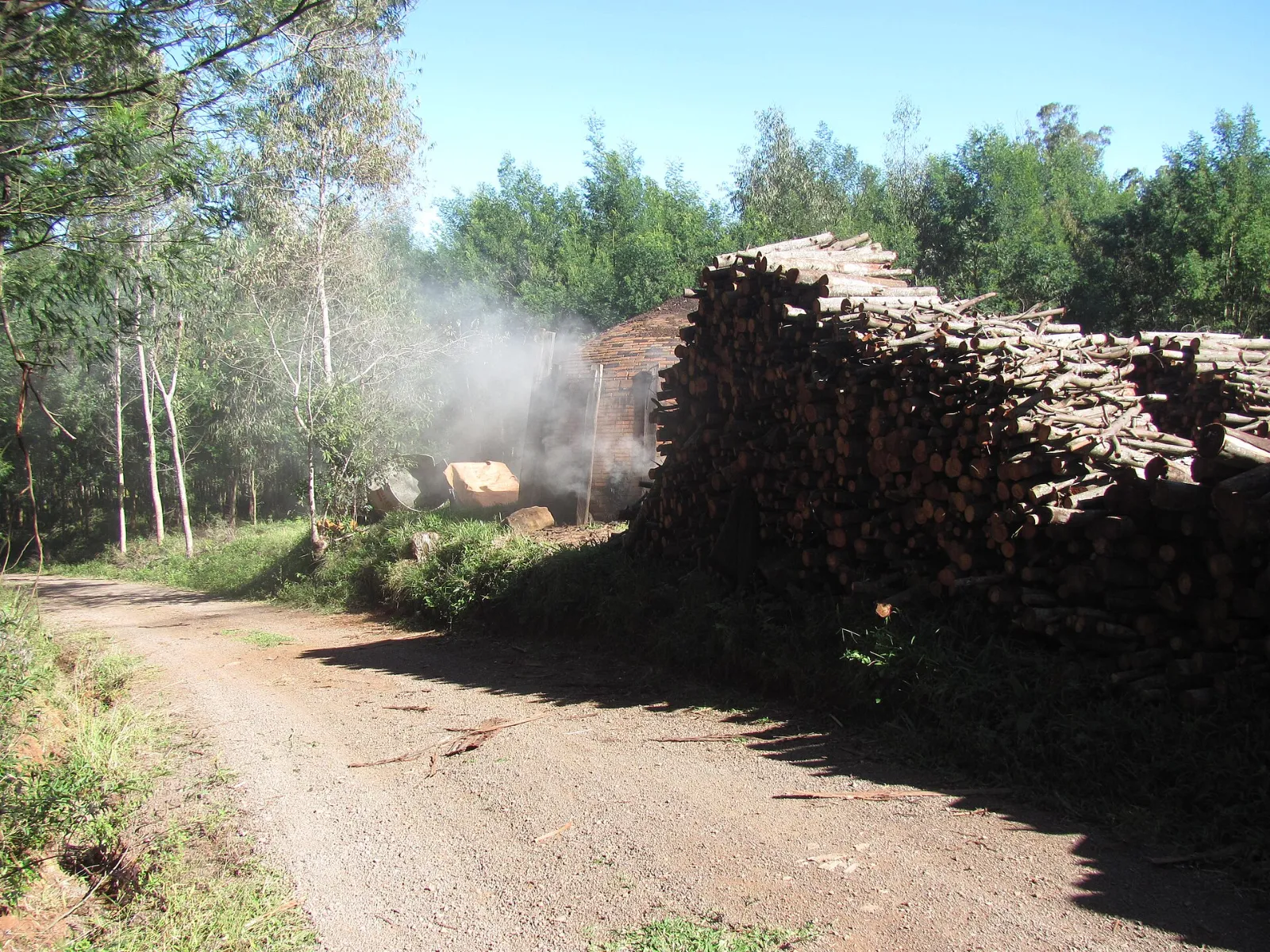
The wood is stacked tightly inside the brick kiln: thick pieces in the middle, thin ones around them. Then the door is sealed with brick and mud, and air only enters through the vents.
With very little oxygen, the wood doesn't burn: it transforms. First it releases its water. From about 270 °C it gives off its own heat and turns into charcoal. It is complete between 500 and 700 °C.
When the smoke turns blue and almost clear, every air inlet is sealed. The kiln cools for days: opening it sooner would rekindle the fire.
The cooled kiln is opened and the lump charcoal is separated from fines and under-carbonized brands. It is never wetted: water lowers its quality.
It is packed dry in sealed sacks that protect it from moisture, ready for your grill or your restaurant.
Products
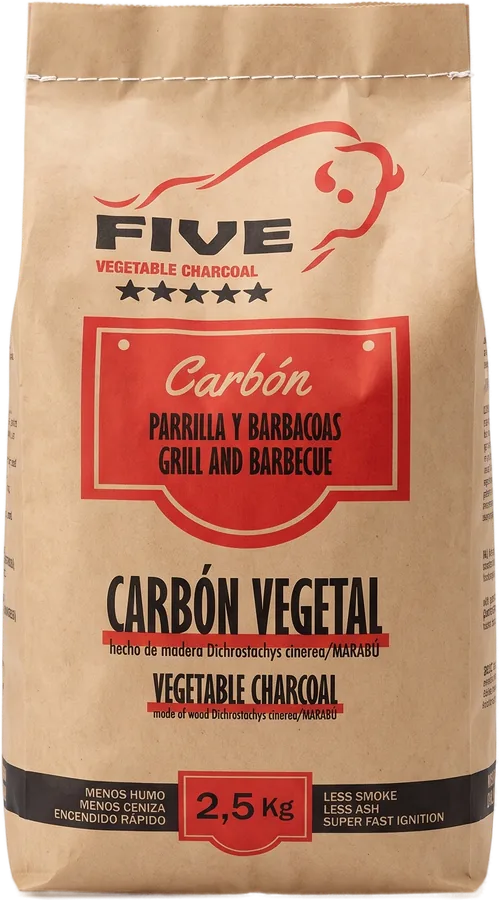
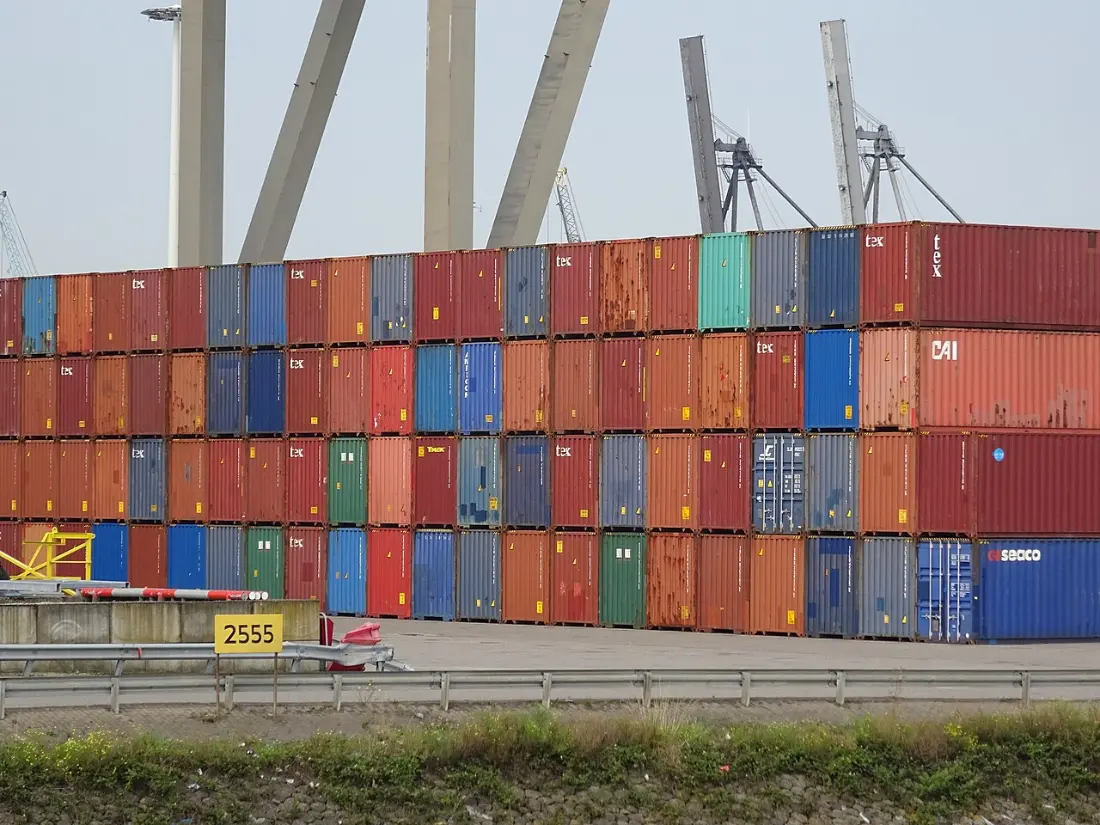
The same marabu charcoal, sorted and free of fines, always bagged: in 2.5 kg sacks for the home grill or 20 kg sacks for professional kitchens, shipped by full container.
Private label
We pack the same marabu charcoal under your chain's, store's or distributor's brand, in 2.5 kg or 20 kg sacks, by full container.
Hospitality · Retail · Distribution
Tell us about your business and how much charcoal you need, or book a call with our team. We'll reply with prices, samples and shipping options.
Call · 30 min
Talk to our sales team.
Pick a day and time that suits you: Monday to Friday, 9:00 to 17:00 Panama time. You'll get the confirmation and call link by email.
Pick a day and timePrefer a new tab? Open the calendar on Cal.com
Loading calendar… Not loading? Open the calendar on Cal.com
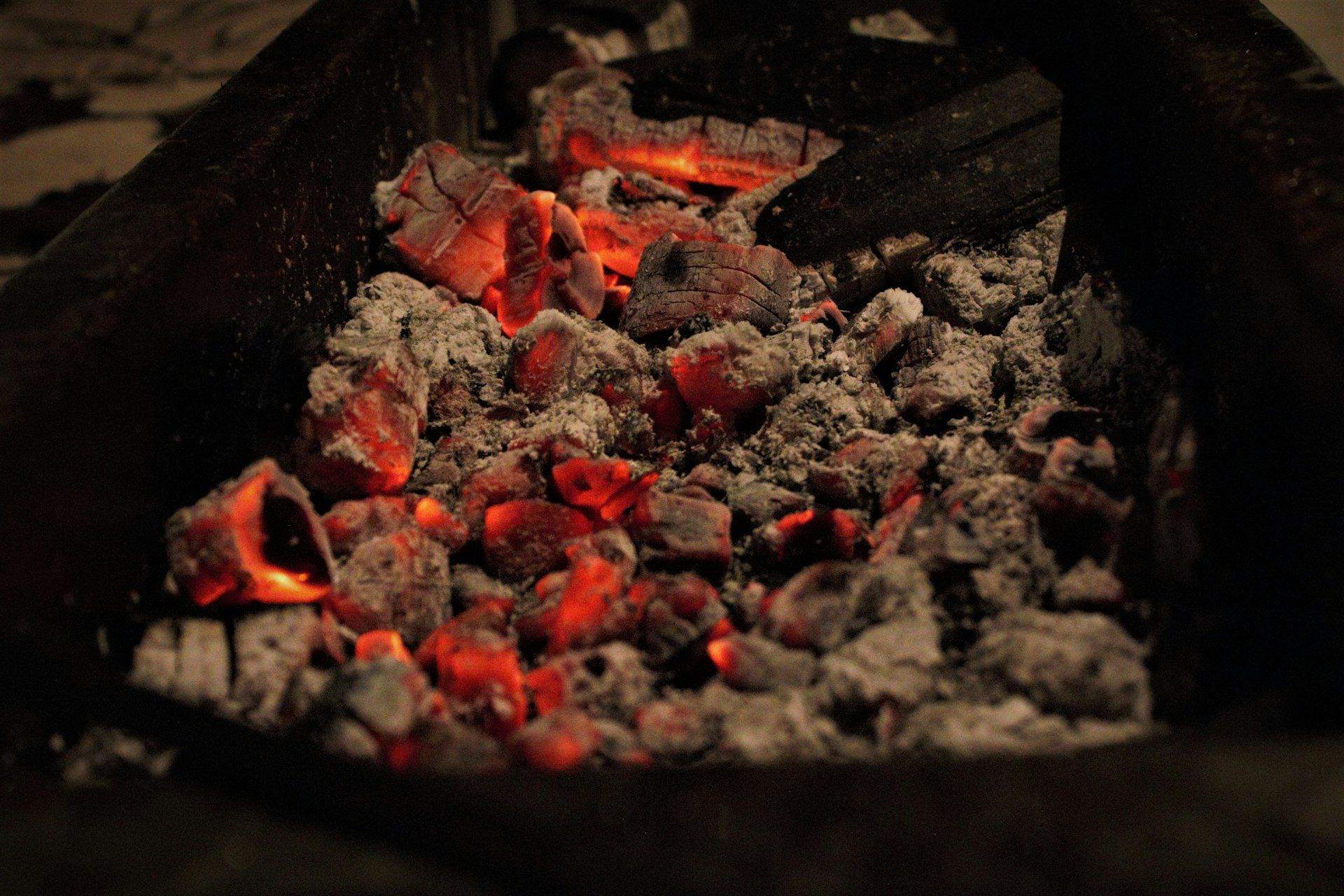
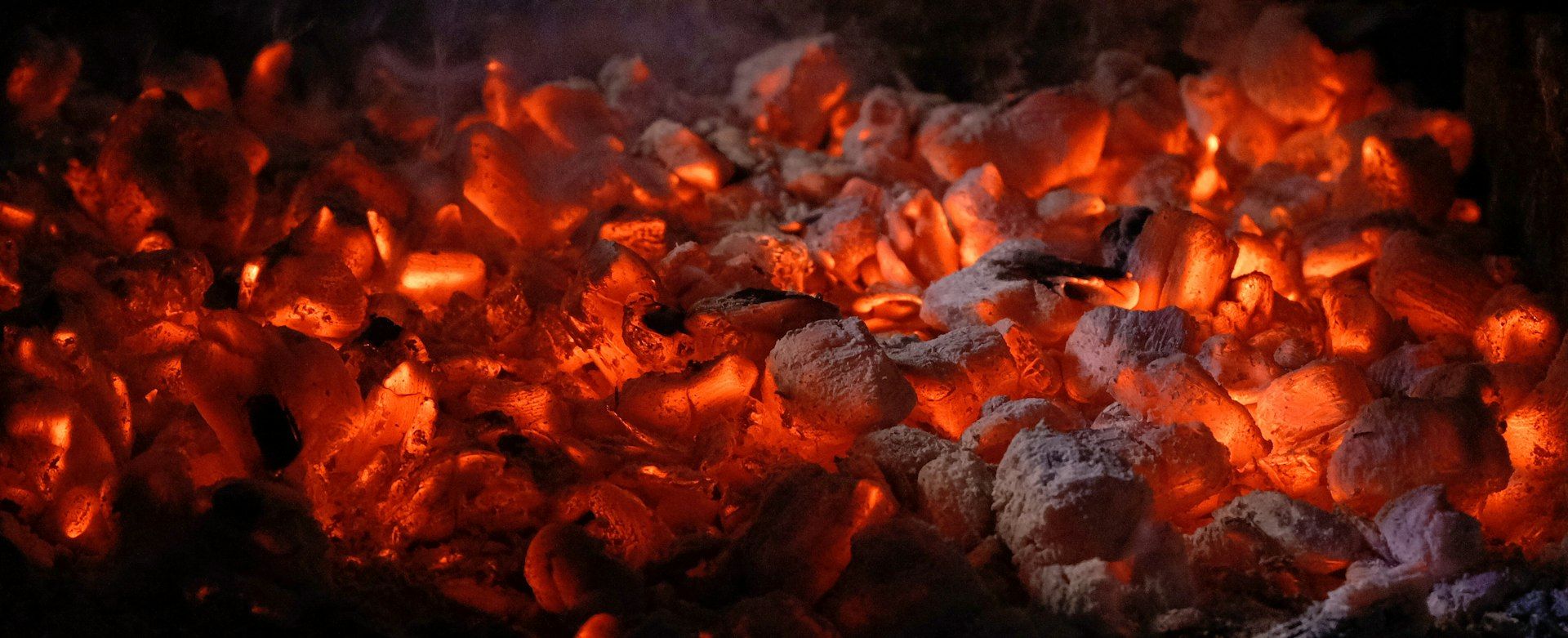 Marabu charcoal embers.
Guide · Marabu charcoal
Marabu charcoal (also called marabú charcoal or Cuban marabu charcoal) is lump charcoal made from the wood of marabu, a thorny invasive bush. It is dense, burns slow, runs hot and makes little smoke: that's why grill masters, restaurants and importers look for it.
01 · At a glance
02 · FAQ
It is lump charcoal made only from marabu wood (Dichrostachys cinerea). The wood is carbonized in kilns with very little oxygen: it loses its water and gases and becomes almost pure carbon, in heavy pieces that keep the grain of the wood.
Because marabu wood is very dense. That gives heavy pieces with high fixed carbon (≈ 80%) and low volatile matter (5–10%): more heat per kilo, embers that last longer and little smoke on the food. And as a single wood, it behaves the same sack after sack.
Marabu is native to Africa, India and northern Australia and reached the Caribbean in the 19th century. The best-known case is Cuba, where it covers about 20% of arable land and around 80,000 tonnes of marabu charcoal are exported every year, mainly to Greece, Spain and Portugal.
With a chimney starter, in 10–20 minutes the embers are covered in grey ash and the smoke is almost gone: you can start cooking. Thanks to its density and fixed carbon it burns slow and even, so one load lasts a long service or a full cook with few top-ups.
Both are hard, high-heat charcoals; the difference is where they come from. Mangroves protect coastlines and mangrove charcoal is banned or restricted in many countries. Marabu is a farm pest: cutting it for charcoal gives land back to farming.
Marabu charcoal is whole carbonized wood: it lights fast without chemicals, smells of wood and responds to air. Briquettes are charcoal dust pressed with binders such as starch, clay or lime: uniform shape, but more ash and less fire control.
Yes, when it comes from invaded fields. Marabu regrows from the root and spreads over fertile land; harvesting it for charcoal turns a pest into a resource, and if the land is planted right away it produces again.
FIVE sells 100% marabu charcoal, sorted and free of fines, always bagged: 2.5 kg sacks for home grills and 20 kg sacks for professional kitchens, by full container. Private label available. Ask for prices and samples on the contact page.
Sources
Photo: Wikimedia Commons.
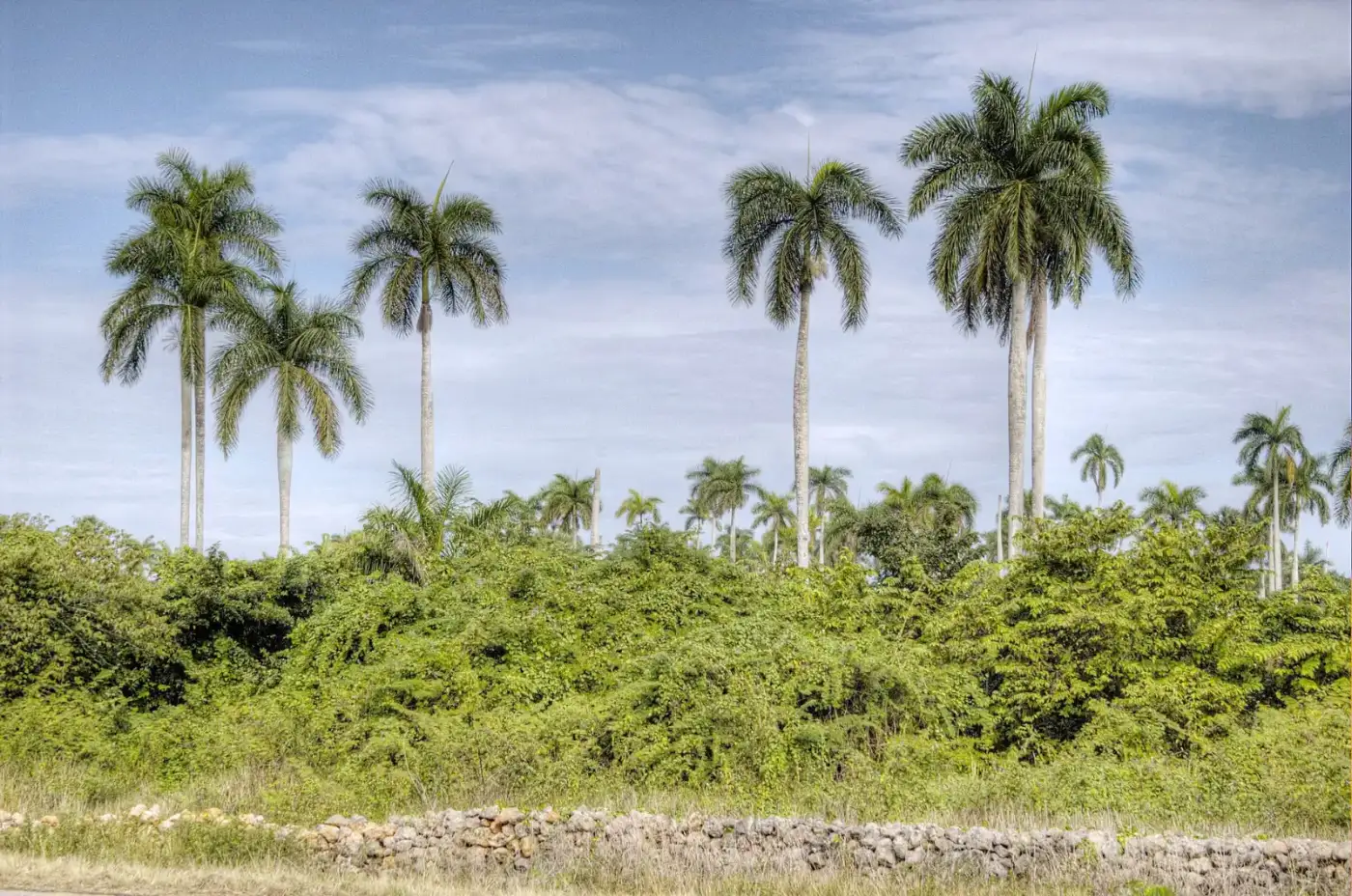 Royal palms above a marabu thicket, Cuba.
Marabu · The plant
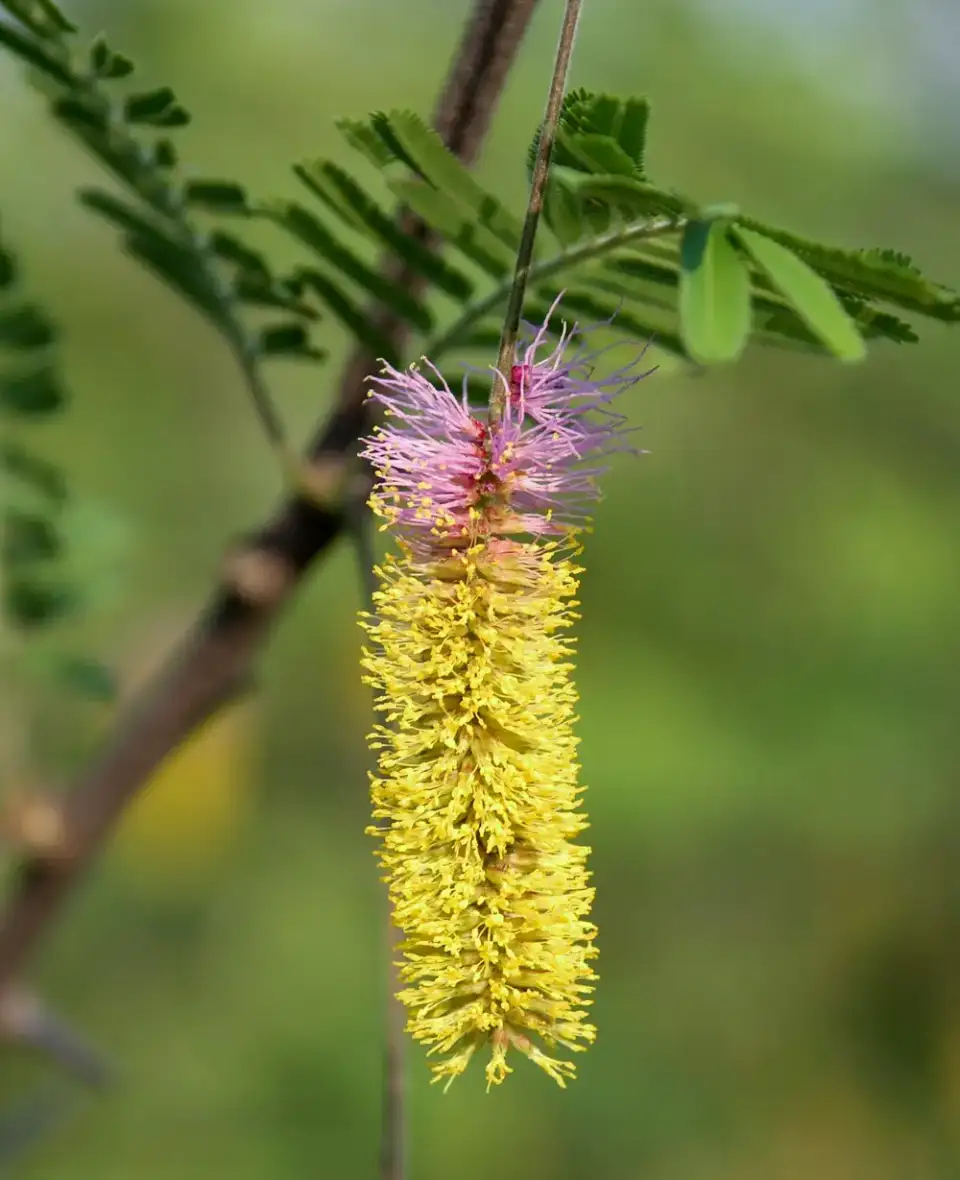
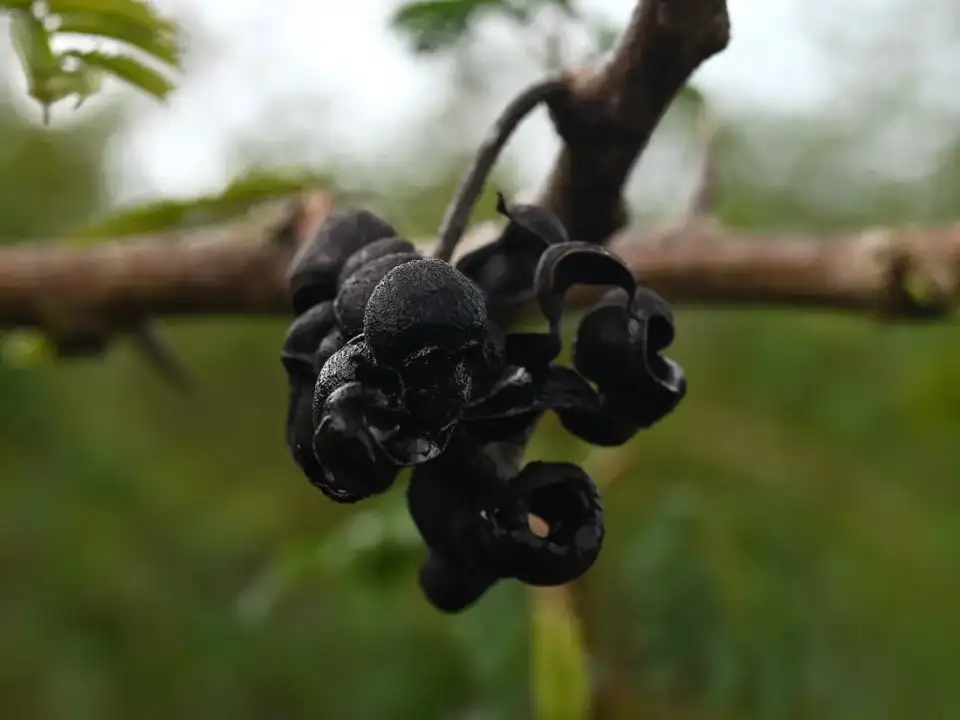
Marabu is a thorny legume that became one of the hardest farm pests to stop in the Caribbean. Its wood, on the other hand, is among the best there is for making charcoal.
01 · Profile
02 · History
20%
of Cuba's arable land is covered in marabu.
20,000 km²
of farmland: almost the size of El Salvador.
80,000 t
of marabu charcoal exported by Cuba every year, mainly to Greece, Spain and Portugal.
19th century
It reaches the Caribbean from Africa, India and northern Australia.
1990s
In Cuba, the economic crisis leaves fields untended and marabu takes them over.
2011
Plans are made to export 40,000 tonnes of marabu charcoal to Europe.
2017
First shipment to the US: 40 tonnes, the first Cuban product sold there in over 50 years.
Today
It covers about 20% of Cuba's arable land.
03 · The problem
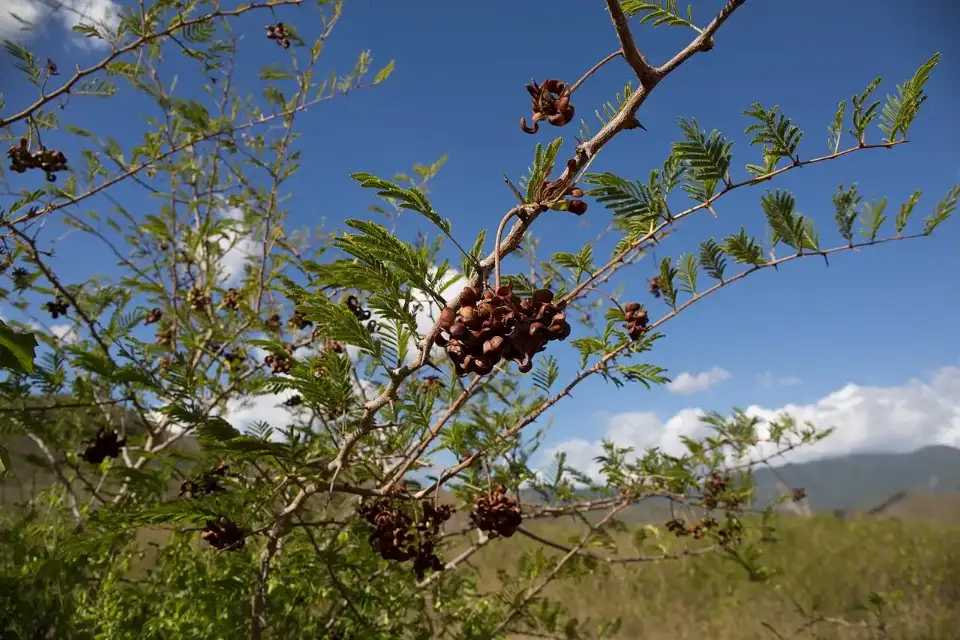
Each plant produces huge numbers of seeds almost all year, and they survive a long time in the soil.
It also spreads by roots and suckers. Simply cutting and burning doesn't get rid of it.
It withstands drought and heat, so it advances where other crops give up.
04 · The solution
What a farmer sees as a thicket of thorns, a charcoal maker sees as first-class firewood.
A thicket of thorns where nothing can be planted.
Marabu is cut by hand and stacked like firewood.
In the kiln, that wood becomes FIVE.
If it's planted right away, the land produces again.
Every sack of FIVE is a piece of land reclaimed.
Sources
Photos: Wikimedia Commons — Ángel M. Felicísimo (CC BY-SA 2.0), Godot13 (CC BY-SA 3.0), Krzysztof Ziarnek, Kenraiz (CC BY-SA 4.0), Christian Pirkl (CC BY-SA 4.0).
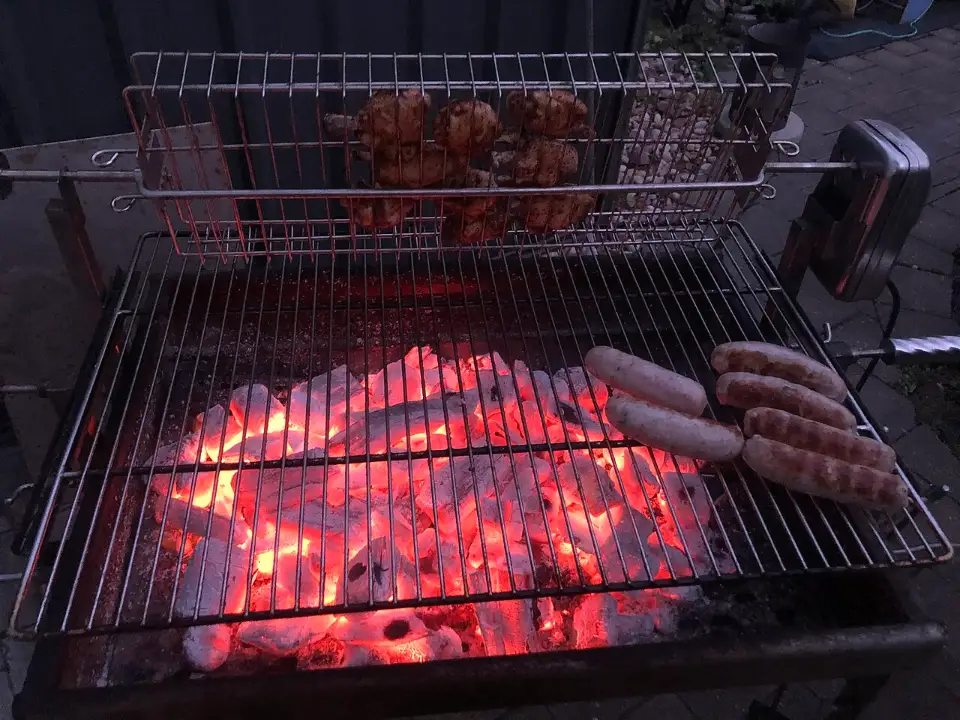
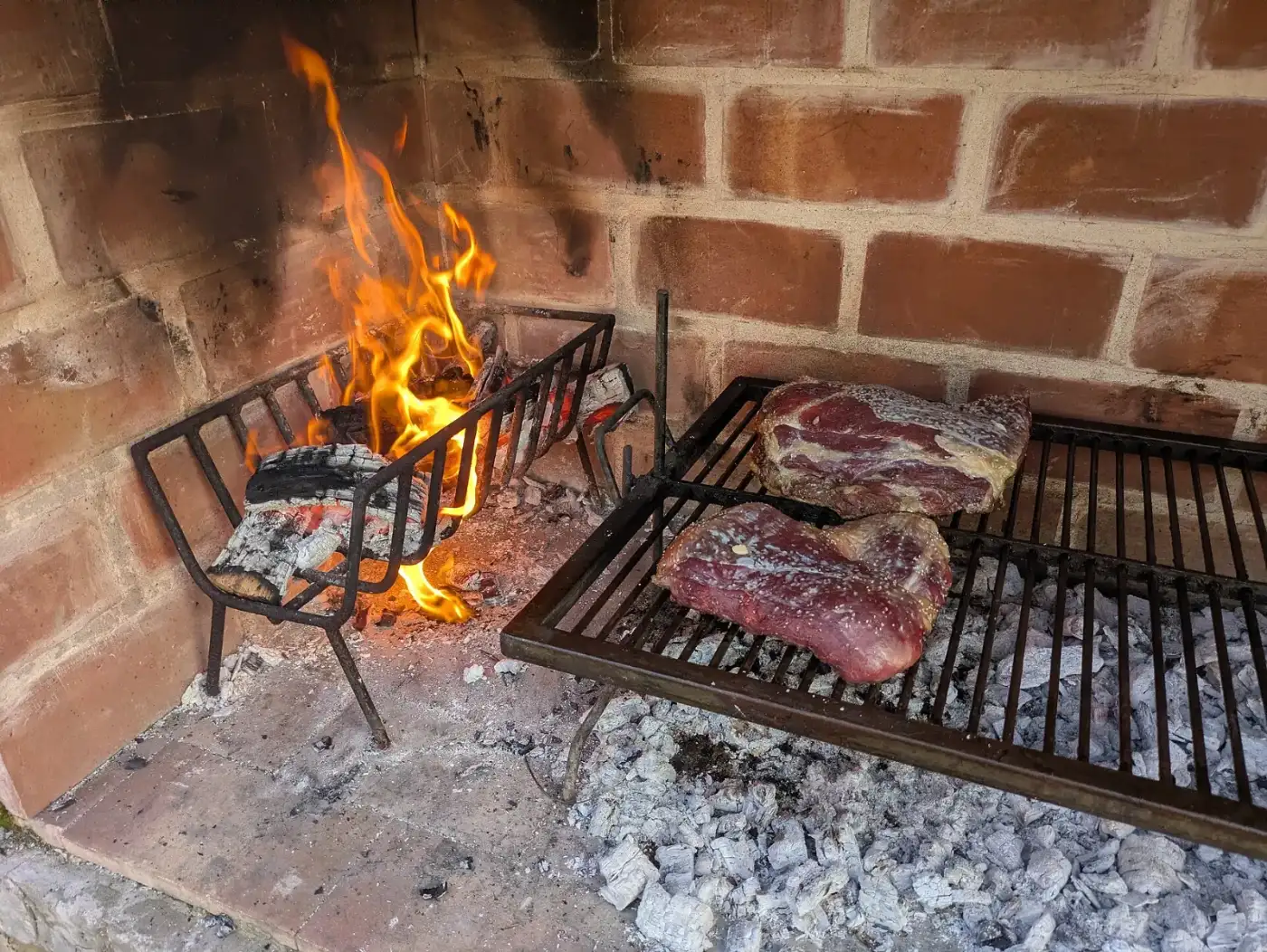 Embers and grill.
Quality · The five virtues
Behind every star is a lab figure. Here's what each one means, and how you notice it when you cook.
Calorific value
29–32
MJ/kg · ≈ 7,000–7,600 kcal per kilo
How much energy a kilo releases as it burns. Marabu charcoal packs almost 1.5 times the energy of its own wood.
On the grill: Sears in seconds and keeps the grill hot with a smaller load.
Fixed carbon
≈ 80%
in well-carbonized charcoal
It's the part that keeps glowing as embers after the smoke is gone. The higher it is, the longer the fire lasts.
On the grill: You top up less charcoal mid-service or mid-cook.
Volatile matter
5–10%
and less than 0.05% sulfur
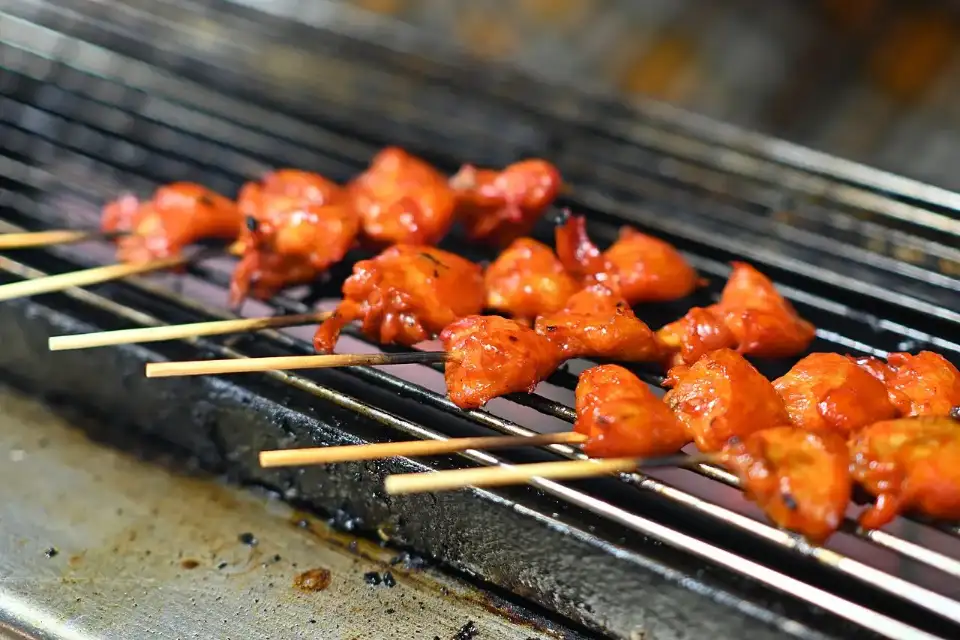
Volatiles are what comes off as smoke and flame when you light it. Fewer volatiles, less smoke on the food.
On the grill: After 10–20 minutes the embers are covered in grey ash and the smoke is almost gone: you can start cooking.
Ash
2–5%
what's left at the end
A very dense wood gives heavy, compact pieces that burn down whole, without crumbling into dust.
On the grill: Less ash to empty and to block the air vents.
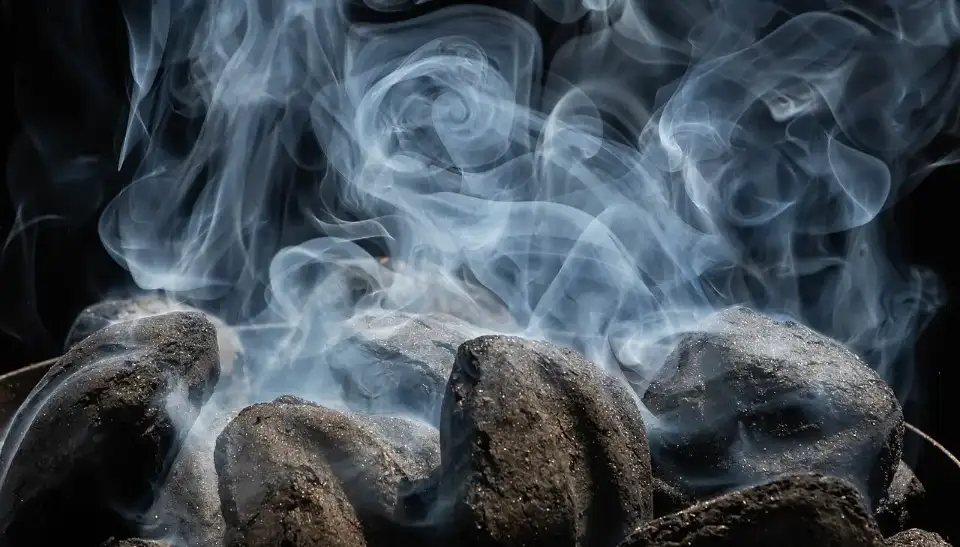
Species in the sack
1
marabu only
A single wood gives a predictable fire: the same ember size and the same heat, sack after sack.
On the grill: What you light today behaves just like what you lit last week.
Reference values for marabu charcoal from the Universitat Politècnica de València analysis (2025); they will be replaced by lab results for each FIVE batch.
Sources
Photos: Wikimedia Commons — Maxd2 (CC BY-SA 4.0), Pattaya Patrol (CC BY-SA 4.0), Tomascastelazo (CC BY-SA 4.0).
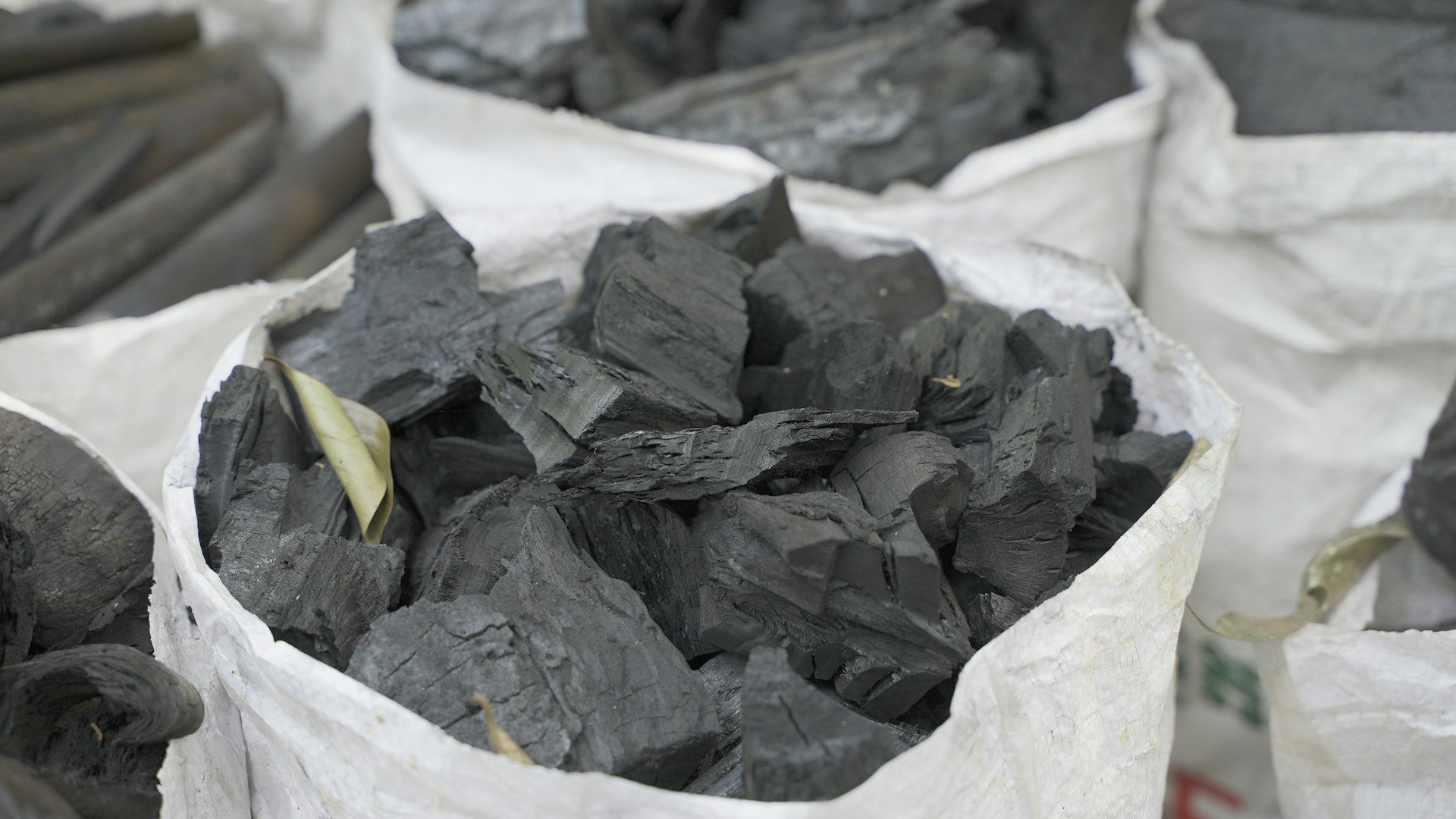
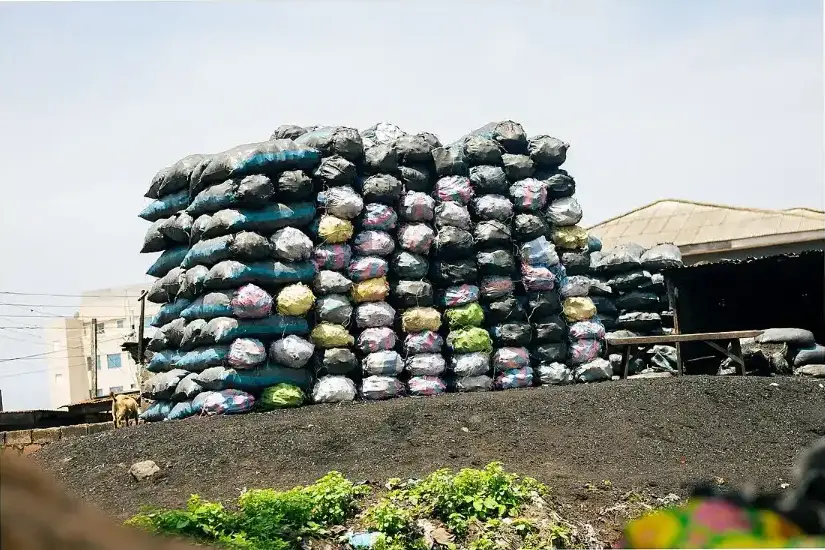 Charcoal sacks in a warehouse.
Buying guide · FIVE vs. ordinary charcoal
Briquettes, blends and wood scraps look alike on the shelf, but not on the grill. Here's how to tell them apart.
01 · Head to head
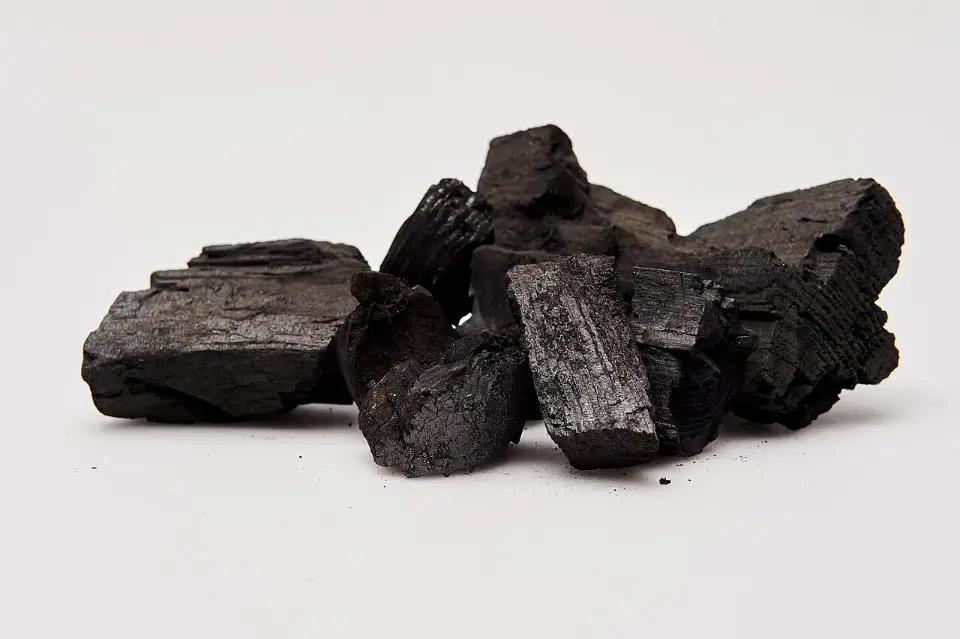
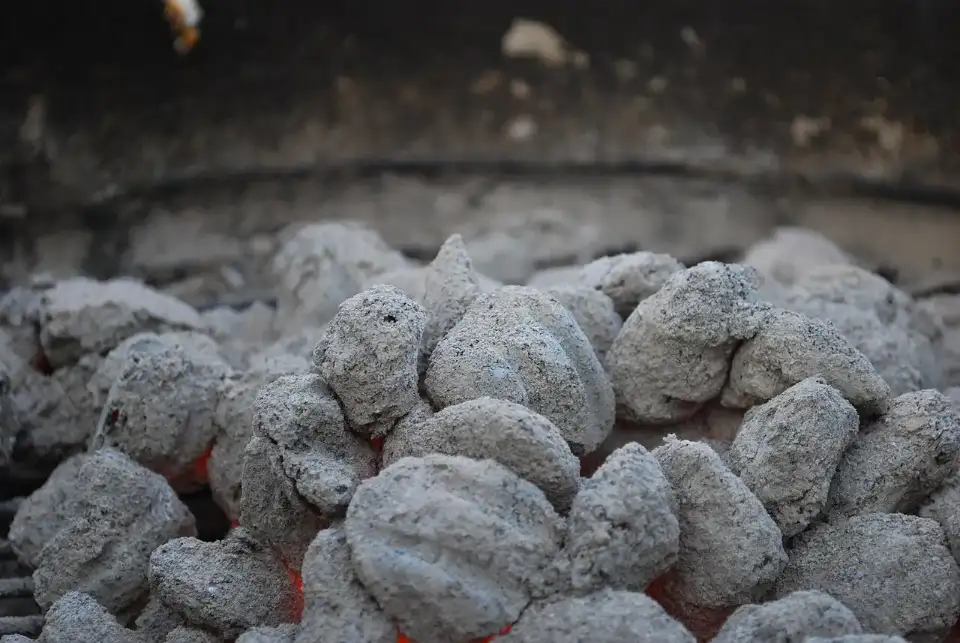
02 · Comparison
| FIVE charcoal | Briquettes | Mixed charcoal | |
|---|---|---|---|
| What it is | Lumps of a single wood, carbonized whole | Charcoal dust pressed with a binder | Scraps of assorted woods, species not declared |
| What's in it | Marabu only | May contain starch, clay, coal, lime, borax or sodium nitrate | Unknown |
| Ash | Little | A lot | Variable |
| Lighting | Fast, no chemicals | Slower; some include accelerant | Uneven |
| Fire control | Responds to air: open it and it rises, close it and it drops | Steady heat that responds little | Pieces that die out next to others that burn up at once |
| When lit | Smells of wood | May smell of chemicals | Depends on what's inside |
03 · The standard
The EN 1860-2 standard sets the quality of barbecue charcoal in Europe. It looks at four things.
Decides how much smoke it makes and how long the embers last.
Reveals impurities: soil, stones or filler.
Damp charcoal lights poorly and never reaches its top temperature.
Small pieces burn too fast; huge ones choke the fire.
04 · In the store
In transport, fragile charcoal can lose 10 to 20% of its weight as useless dust.
When lit it should smell of wood, not fuel.
A sign the embers are ready and the smoke is done.
If the sack doesn't say what wood it is, you don't know what you're burning.
Moisture lowers the temperature and makes lighting harder.
Sources
Photos: Wikimedia Commons — Unlimited Ed (CC BY-SA 4.0), Dati Bendo / European Commission (CC BY 4.0), Juliancolton (public domain).
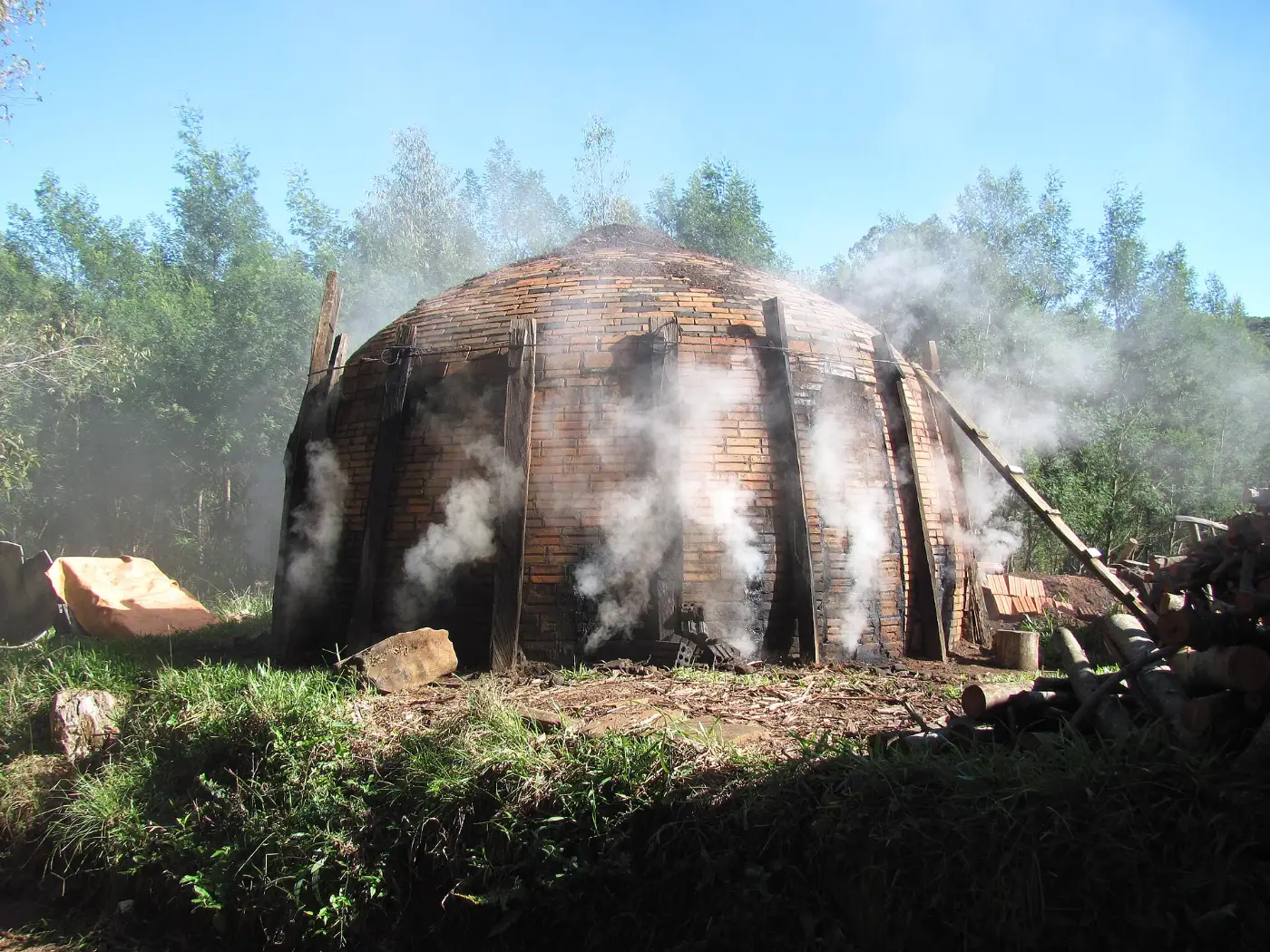 A brick kiln in full carbonization.
How it's made · From the bush to the grill
Making charcoal means taking everything that isn't carbon out of the wood without letting it catch fire. Water, smoke and gases leave; what remains is a lighter, purer fuel with far more energy.
01 · Transformation
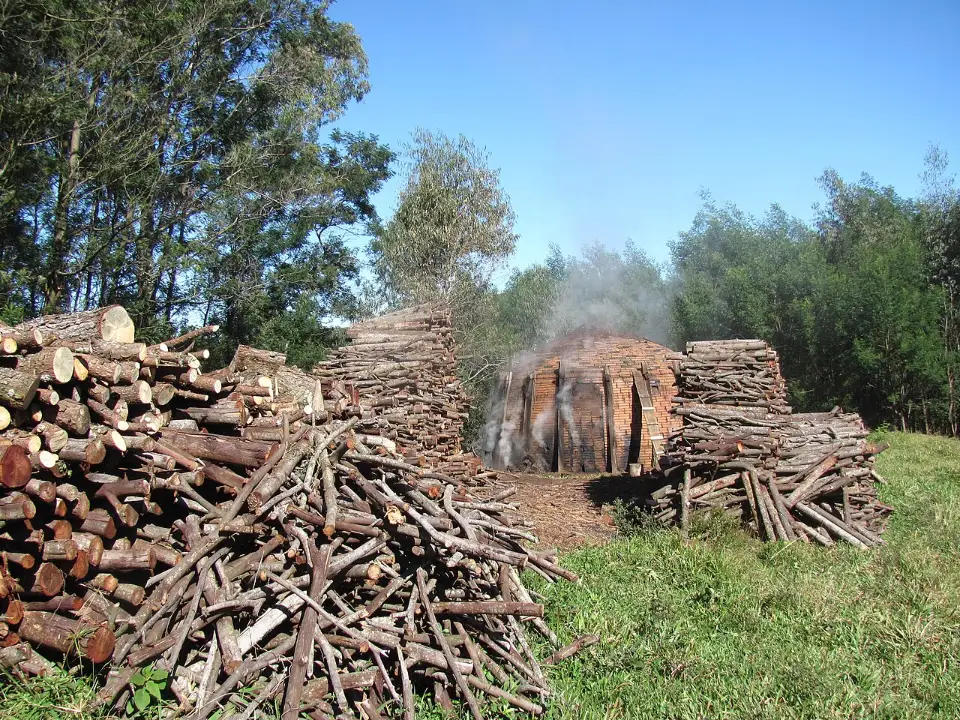
Carbon
51%
in dry wood
80–85%
in charcoal, at 500–600 °C
Energy per kilo
19.5–20.2
MJ/kg in the wood
29–32
MJ/kg in the charcoal
The hotter the kiln, the purer the charcoal. That's why well-made charcoal gives almost 50% more heat than the wood it comes from.
02 · Yield
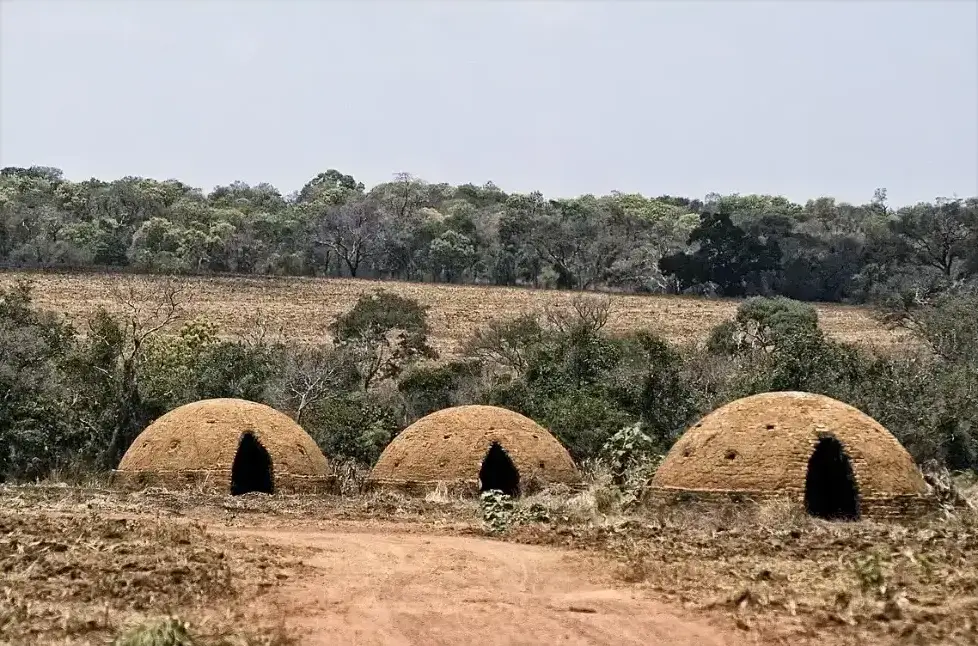
≈ 20 kg
of charcoal come from every 100 kg of wood in a brick kiln.
The rest leaves as water, smoke and gases. That's why charcoal weighs so little for the energy it holds, and why the kiln is watched day and night: opening and closing vents decides how much air gets in. Too much, and the wood burns away to ash.
03 · The kiln
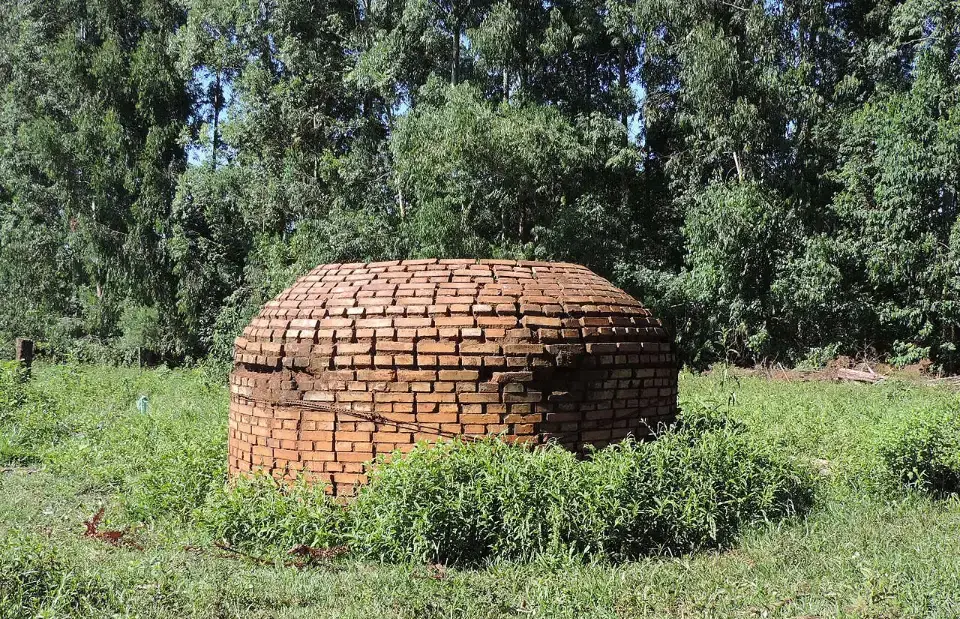
The vents open and close at will: the whole load carbonizes evenly, with no half-done pieces.
The wood never touches soil or sand. Less ash, no grit in the sack.
Less wood is lost to burning: more kilos of charcoal from every tonne of marabu.
A fixed kiln repeats the same process batch after batch: today's charcoal behaves like last month's.
| Brick kiln | |
|---|---|
| Yield | ≈ 20% of the wood's weight |
| Cycle length | 9–25 days, load to load |
| Capacity | 50–130 m³ interior volume |
| Service life | 8–10 years with good upkeep |
04 · On your grill
Sack closed and off the floor. Damp charcoal is hard to light and runs cooler.
Use a chimney starter with paper or natural firelighters. Lighter fluid leaves a taste.
In 10–20 minutes the embers turn grey: that's the time to cook.
Embers piled on one side for searing; the other side, with fewer, for finishing.
Without oxygen the embers go out. Leftover charcoal can be used again.
Sources
Photos: Wikimedia Commons — Paulo rsmenezes (CC BY-SA 3.0 BR), Otávio Nogueira (CC BY 2.0), Jair Seibert (CC BY-SA 3.0), AlphaLemur (CC BY-SA 4.0).